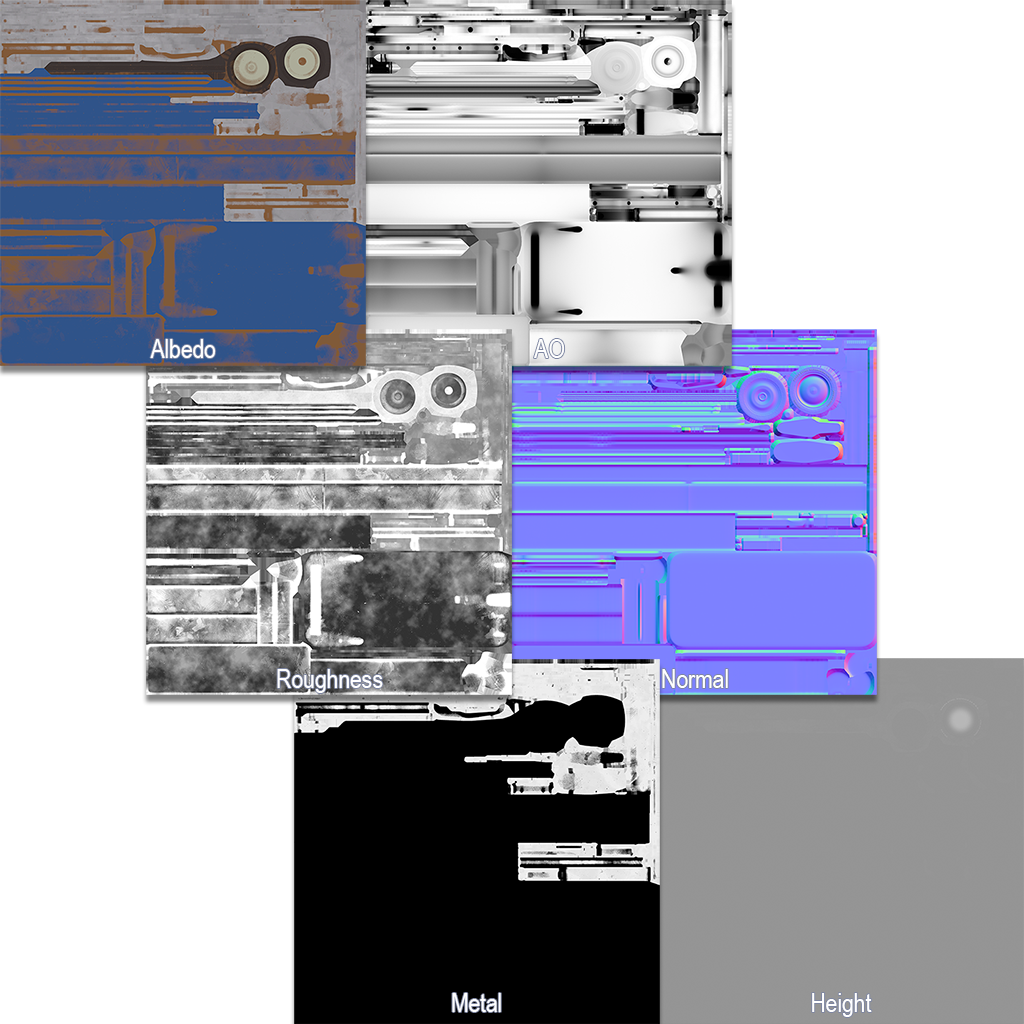
Roughness | Normal
Metal | Height
Zoom in Individual Images for Detail
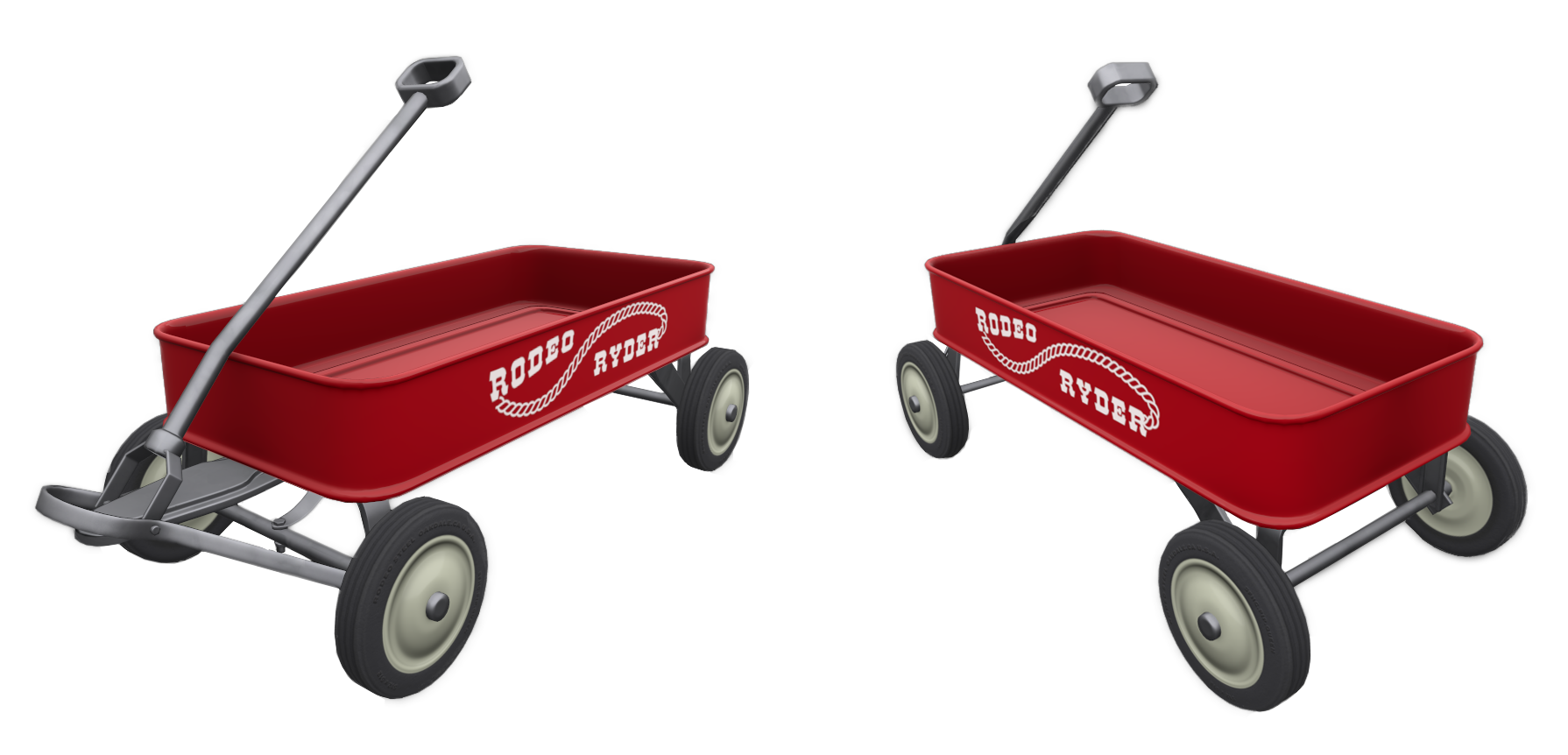
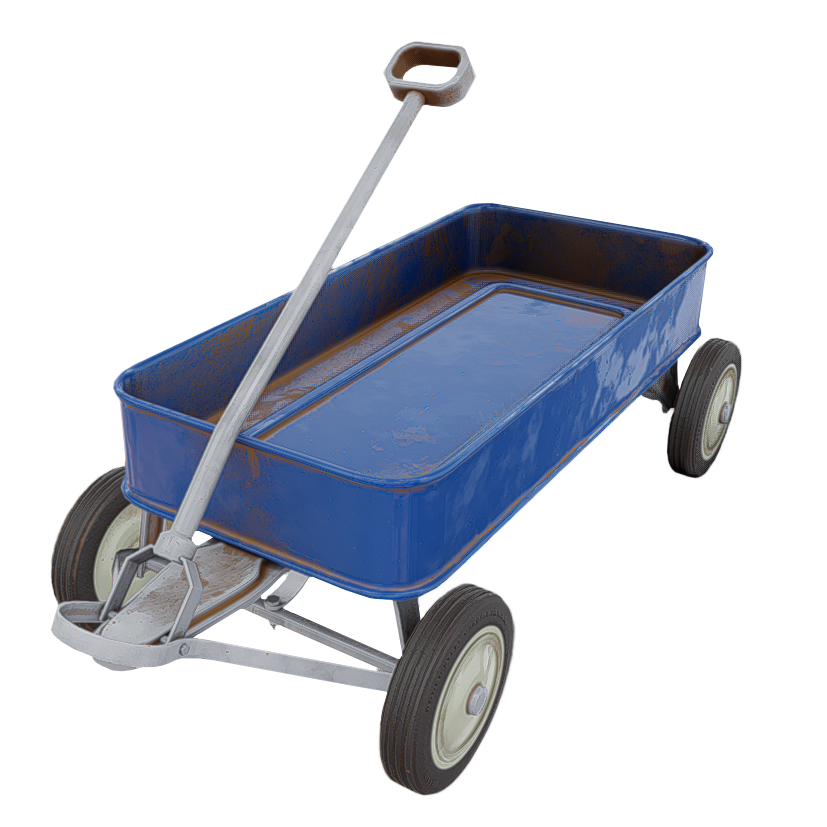
My childhood wagon spent years rolling across my grandparents’ five-acre yard, hauling beaudarc apples, pine cones, sticks, rocks, and anything else my brother and I gathered to help Grandpa. That old Radio Flyer carried more rust than paint, but the metal stayed smooth and surprisingly sturdy. Those memories shaped the direction of this project. I wanted a wagon that captured the charm of a well loved classic while honoring the older mechanical designs that defined those vintage models.
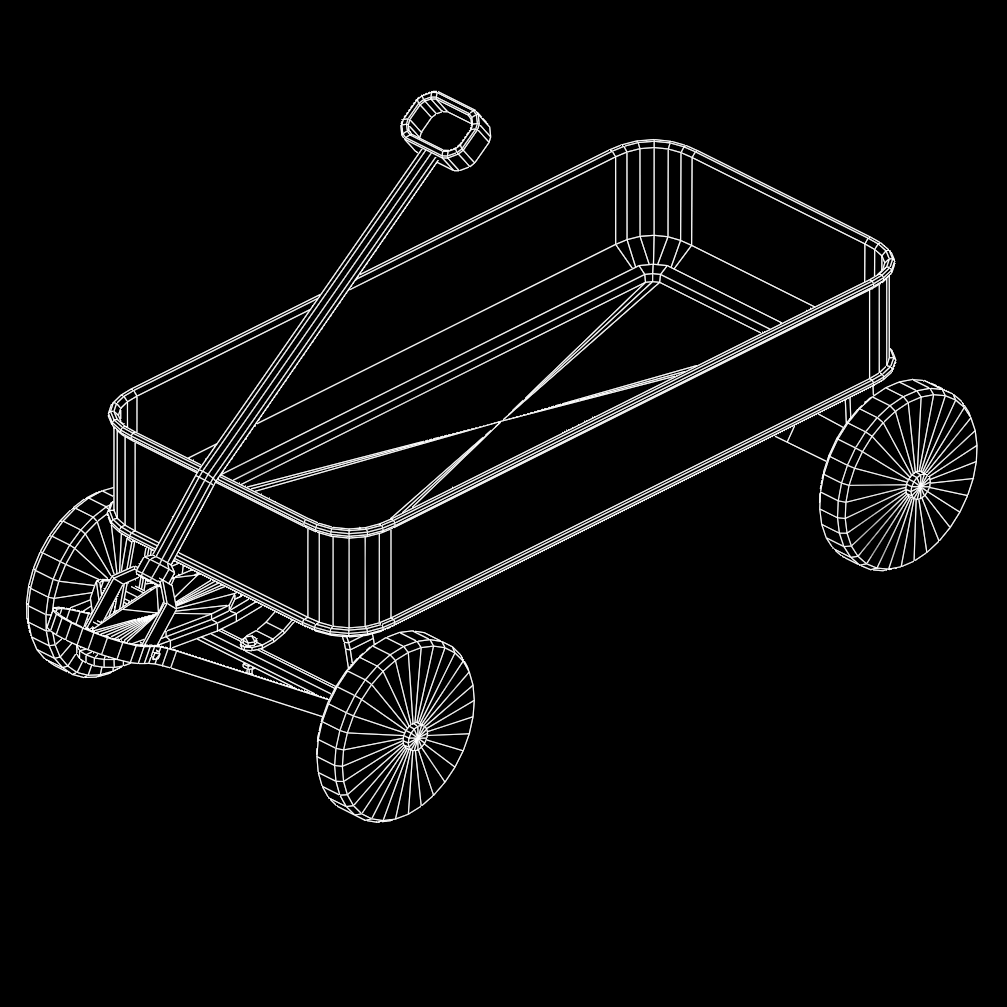
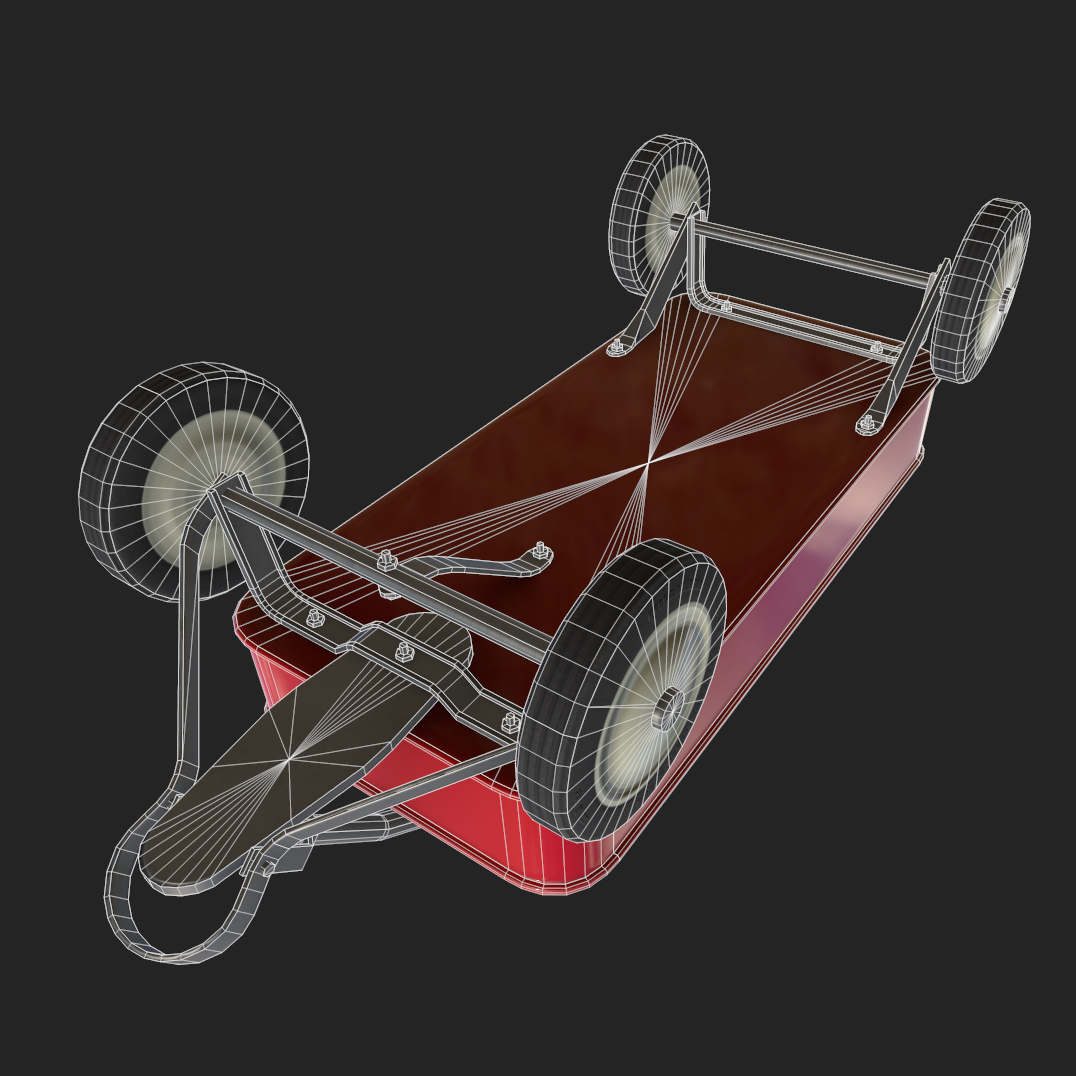
The build began in Maya with a clean low poly workflow. Every component was shaped by hand, from the steering tongue to the carriage brackets, to preserve a believable silhouette and functional structure. High poly details came from manual subdivision and refinement rather than sculpting.
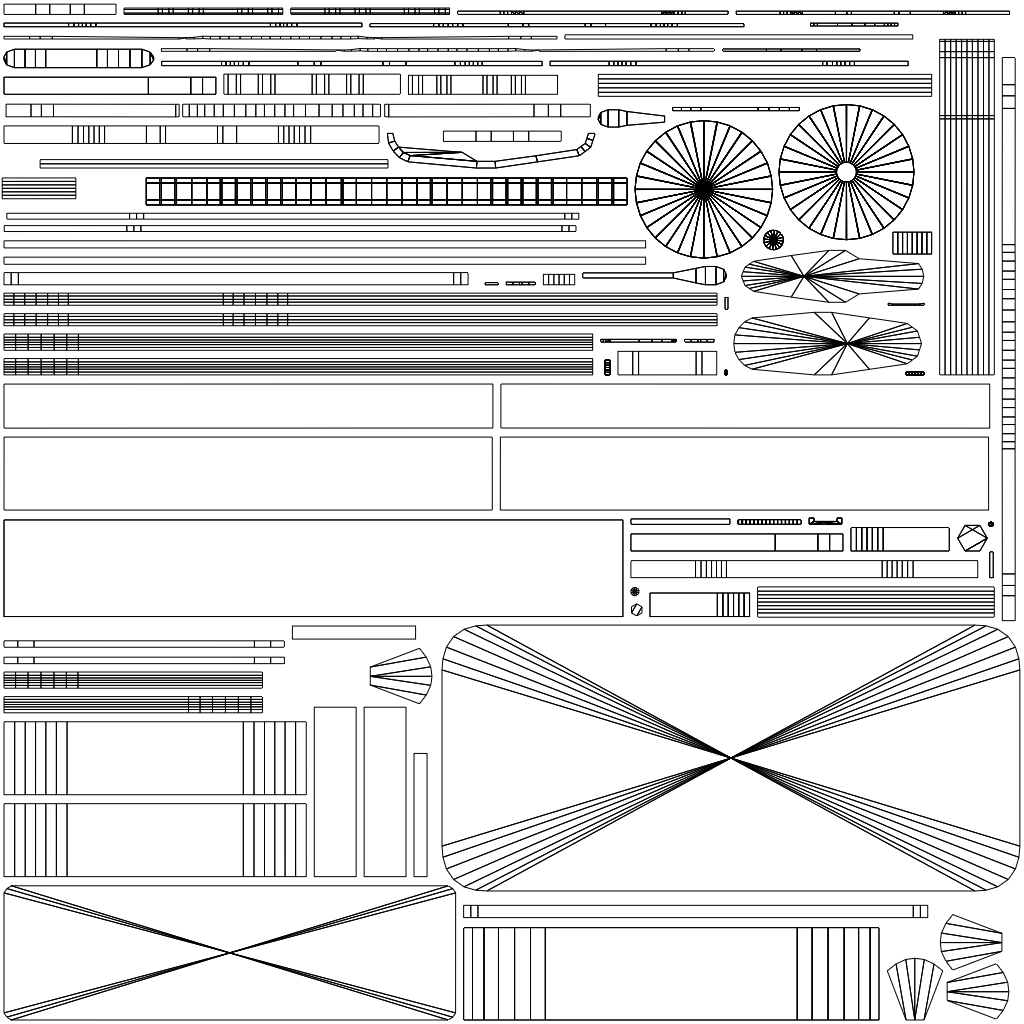
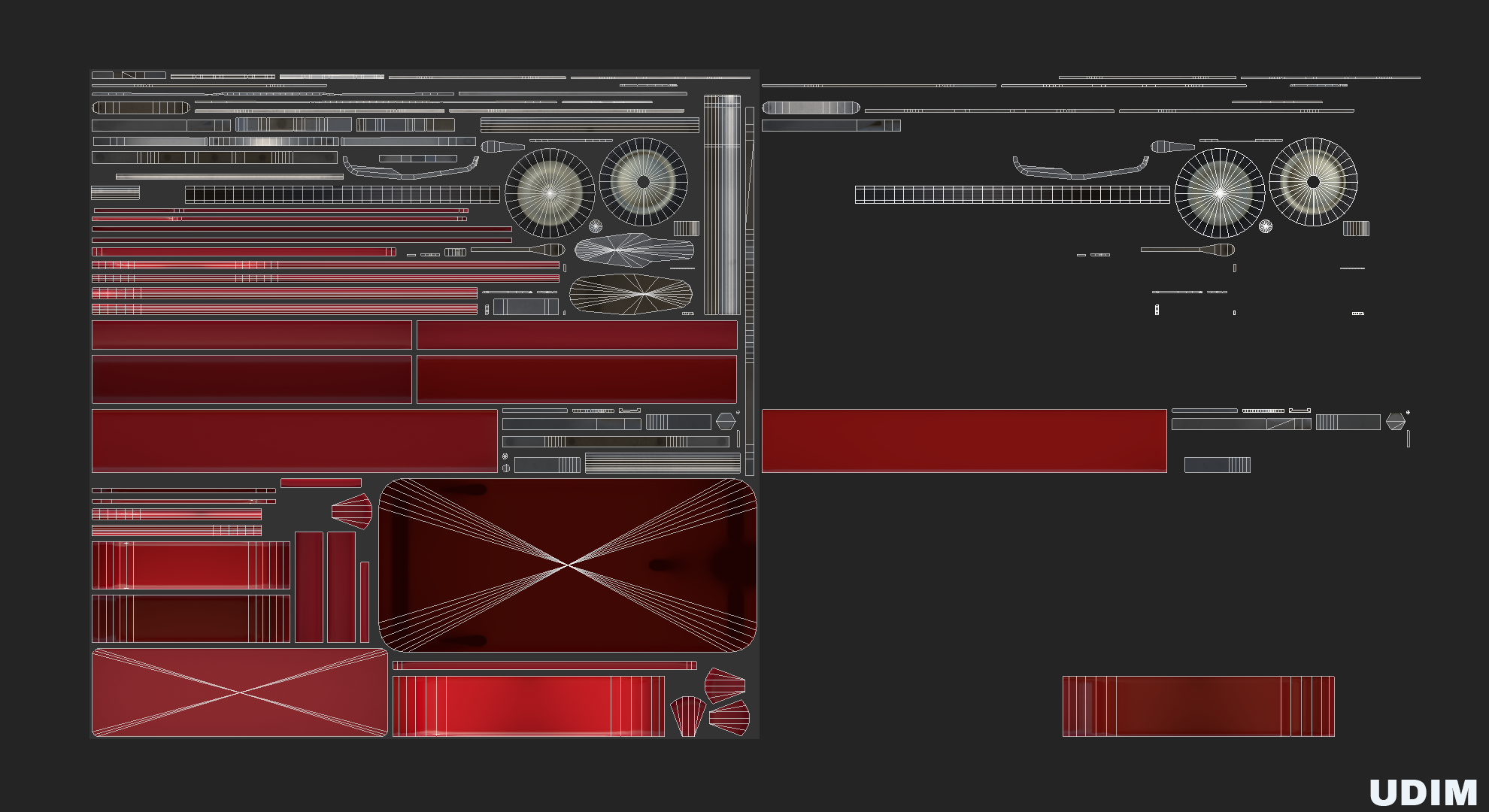
Blender handled the UV work with ZenUV and UVPackmaster Pro. I originally used a UDIM layout during development, but the final version moved to a single 0 to 1 UV tile to support non-mirrored texturing. This allowed the rust patterns, edge wear, and surface variation to remain asymmetrical and natural without the visual artifacts that mirroring creates. The layout still maintained strong texel density and provided clean AO bakes across all components.
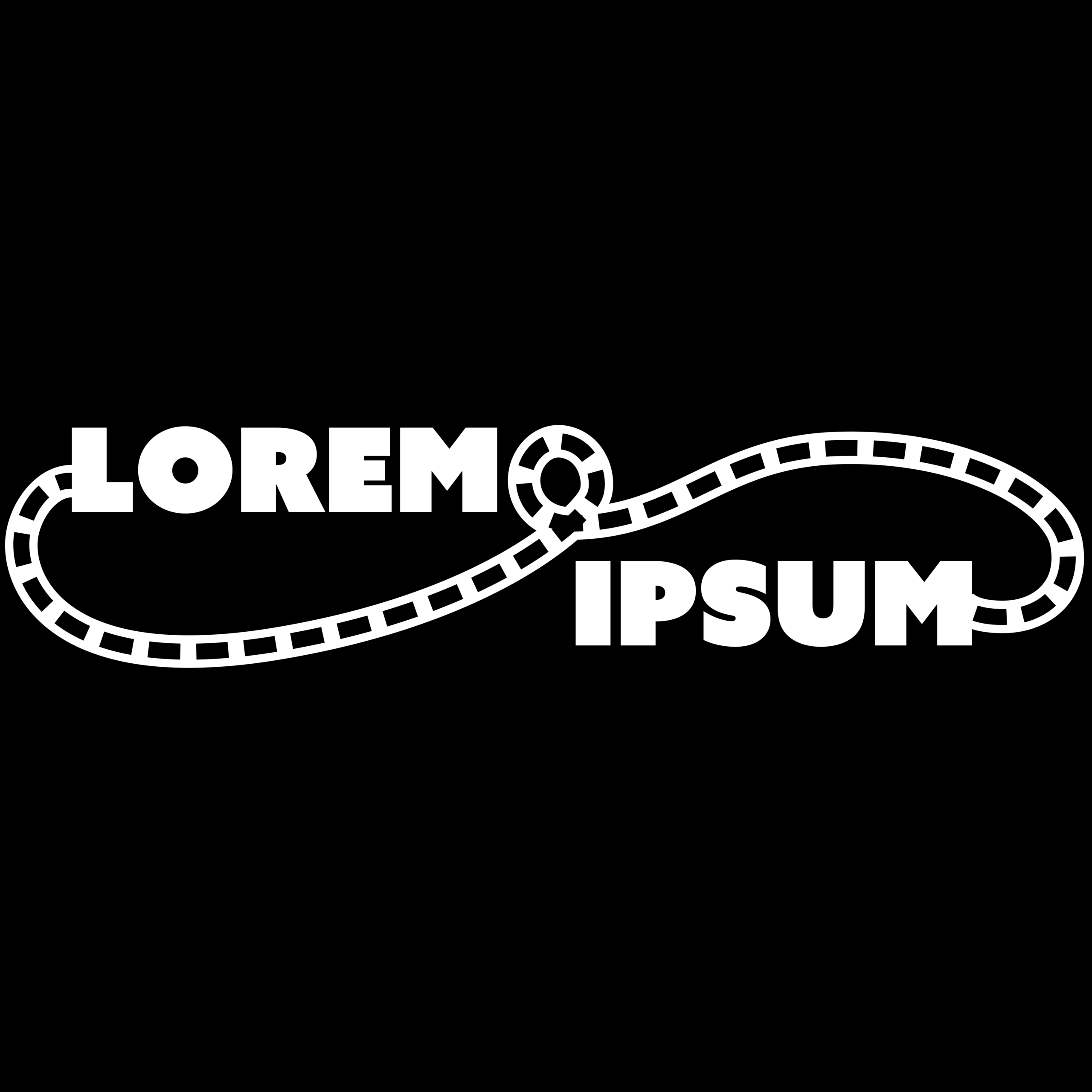
Photoshop and Illustrator supported the graphic work through vector based decal alphas, which provided crisp, scalable shapes. Substance Painter supplied the remaining texture work. Procedural layers and custom alphas created the molded rubber feel on the tires, the chipped paint along the tub edges, and the subtle roughness shifts across the metal frame. The first Proxi version used a simplified shader, so this updated PBR version allowed for a fuller range of material response and lighting accuracy.
Customization guided the UV layout. The base color can be swapped in Substance Painter without disturbing the supporting wear maps, and the decal masks allow for quick branding or color changes. The expanded UDIM space gives extra breathing room for painters who want to add unique variants or surface details without losing precision.
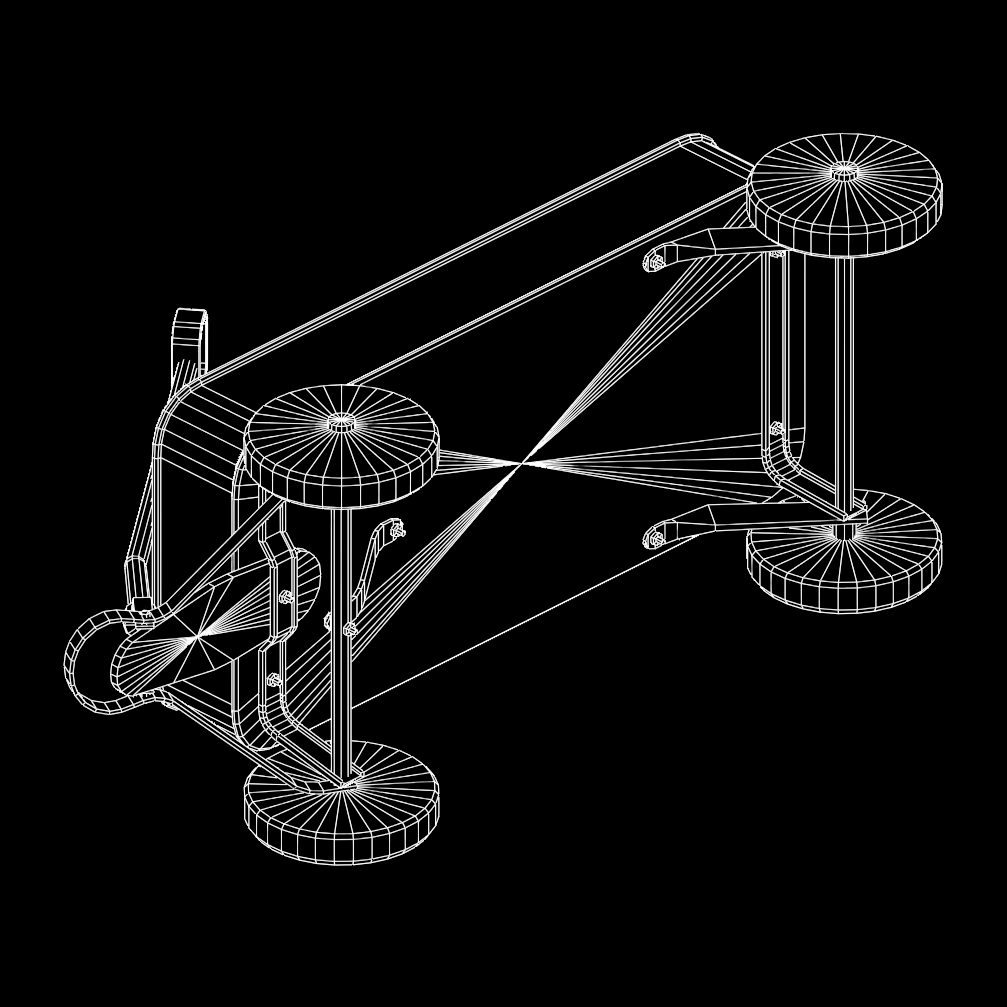
The undercarriage received special attention. The axles, bolts, and metal tubing follow the mechanics of real vintage wagons, and the steering linkage uses a functional pivot structure. Modeled bolts and rounded tubing keep the silhouette strong from multiple viewing angles. Reinforcement panels beneath the tub add to the physical believability of the construction.